02Service
Electrical Wiring
Wiring work, including new circuits and replacement of existing wiring.
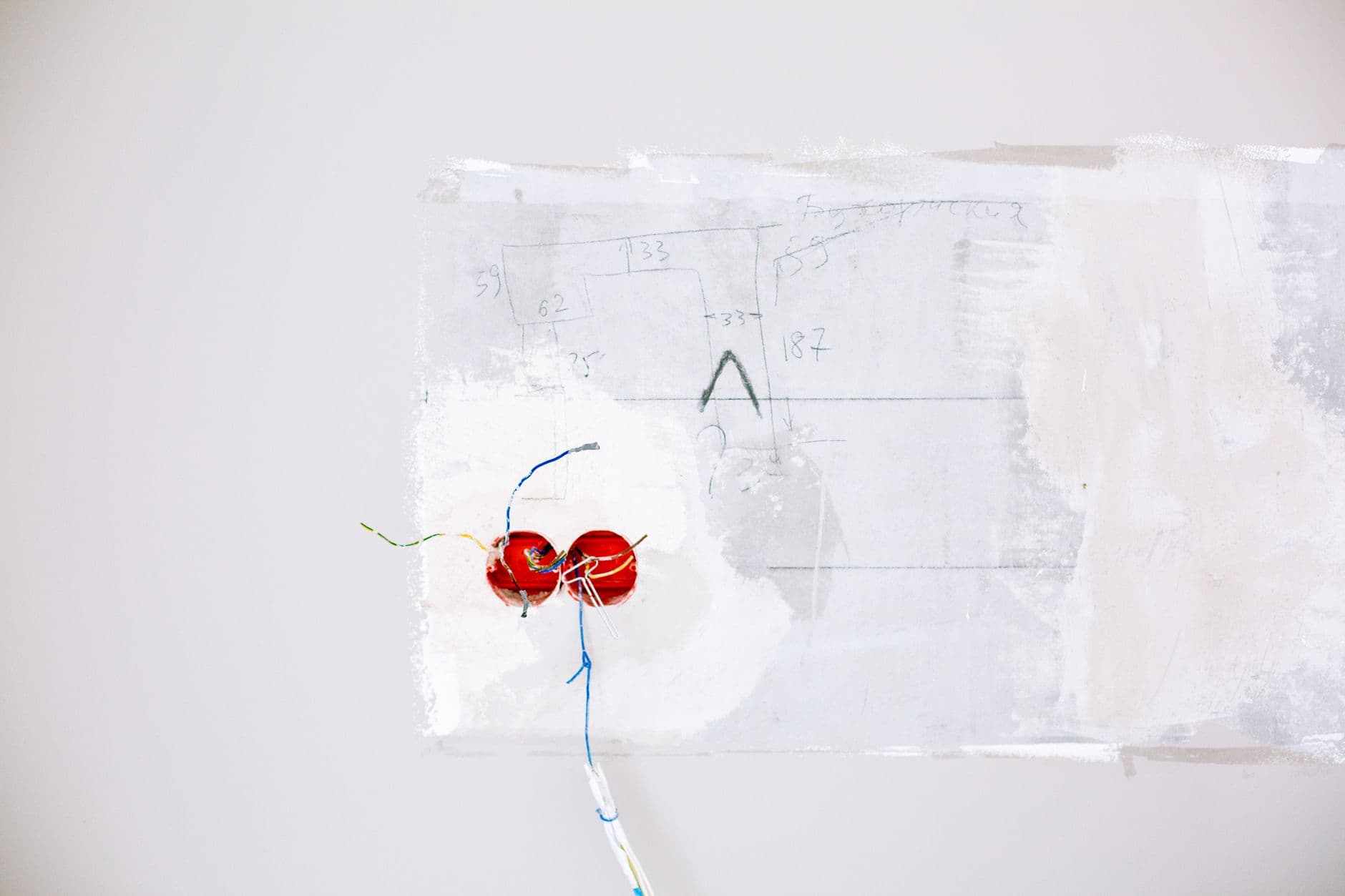
—Background
When a job becomes a wiring job
A job becomes wiring work when cable has to be run, extended or replaced: a new circuit for an appliance, more sockets where a room needs them, or old cable taken out and renewed. The visible result is a socket, a switch or a fused spur. Most of the work is the route the cable takes to get there and the circuit it ends up on.
Two questions shape almost every wiring job. The first is capacity — whether the existing circuit and the distribution board can take the extra load, or whether a new circuit and a spare way on the board are needed. The second is the route — how the cable gets from the board to the new position through a building that is usually already finished.
Replacing existing wiring is a bigger decision than extending it. It is usually considered when an installation is old, has been altered many times without records, or keeps producing faults that point back to the cabling rather than the fittings. Inspection and testing first establish whether replacement is needed at all, and whether it can be done in stages.
01Enquiries
What to tell us
None of this is required. It is what turns a first reply into an answer rather than another question.
- Whether this is new wiring, a replacement of existing wiring, or an extension of it
- Roughly how old the existing installation is, if you know
- Whether walls and ceilings are currently open, or already finished and decorated
- How many points you need and roughly where they go — a rough sketch helps more than a description
- Whether the distribution board has spare ways, if you have looked
—Worth knowing
Before you ask about electrical wiring
What tends to change how this kind of job is done. General points about the work and the property, not promises about it.
- Extending a circuit or adding a new one
- Adding a socket to an existing circuit is simpler, but large fixed loads such as an oven, a water heater or a car charger are normally given a circuit of their own rather than sharing protection with everything else in the room.
- Space on the distribution board
- A new circuit needs a spare way and suitable protection at the board. If the board is full or dated, the board itself can become part of the job.
- Conduit in concrete and block
- In many Dubai apartments and villas cables run in conduit cast into slabs or set into block walls. Where a new route cannot follow existing conduit, surface trunking or a route through a false ceiling may be the realistic option.
- Rewiring an occupied home in stages
- A full rewire can be done room by room or floor by floor so that part of the property stays usable, at the cost of a longer programme and more visits.
- Making good afterwards
- Chasing cable into a wall leaves plaster and paint to repair. Agree beforehand who makes good, and to what finish, so the end of the job is not a surprise.
—Read first
Guides to start with
—Questions
Questions people ask
- How do I know whether wiring needs replacing rather than repairing?
- Repeated faults on different circuits, visible cable insulation that is brittle or discoloured, and a history of alterations nobody recorded are all reasons to have the installation inspected and tested. The results show whether replacement is needed and where, rather than leaving it to a guess.
- Can new sockets be added without damaging finished walls?
- Sometimes. The options include running cable through a ceiling void and down inside a partition, surface trunking, or chasing and making good. Which is possible depends on how the wall is built and where the existing cables already run.
- Does a new appliance need its own circuit?
- Large fixed loads such as cookers, ovens, water heaters and car chargers are normally supplied by a dedicated circuit. Most smaller appliances share a socket circuit. The rating on the appliance label, or in its installation instructions, is the starting point.
- What should I have at the end of wiring work?
- An updated circuit schedule at the board, labels for any new circuits, and the test results for the work done. Keep them with the property’s other documents; they make the next job and the next fault much easier.
—Guides
Guides on electrical wiring
18 guides filed under electrical wiring: what to check, what is safe to do yourself and what to tell an electrician.
- Signs that wiring may need replacing
- Rewiring a villa
- Rewiring an apartment
- Adding a new socket
- Moving a socket or switch
- Replacing extension leads with fixed sockets
- After drilling into a hidden cable
- When an appliance needs its own circuit
- Earthing and bonding, explained
- RCDs and RCBOs, explained
- Circuit breakers, explained
- Labelling a distribution board
- Single-phase and three-phase supplies
- Wiring for an extension, annex or garden room
- MCB or RCBO
- Surface or concealed wiring
- Ring or radial circuit
- Rewiring in stages or all at once
—Also
Other categories
The five overlap at the edges. A fault found during maintenance becomes troubleshooting, and troubleshooting often ends in wiring work.
—NEXT
Ask about electrical wiring.
Send the property and what is happening. We will come back to you.